It’s been a couple of months since AMD first introduced their new third era EPYC Milan server CPU line-up. We had initially reviewed the primary SKUS again in March, masking the core density optimised 64-core EPYC 7763, EPYC 7713 and the core-performance optimised 32-core EPYC 75F3. Since then, we’ve ben capable of get our fingers on a number of new mid and decrease finish SKUs within the type of the brand new 24-core EPYC 7443, the 16-core 7343, in addition to the very curious 8-core EPYC 72F3 which we’ll be reviewing at present.
What’s additionally modified since our preliminary assessment again in March, is the discharge of Intel’s newer 3rd era Xeon Scalable processors (Ice Lake SP) with our assessment of the 40-core Xeon 8330 and 28-core Xeon 6330.
Right now’s assessment shall be centered across the new efficiency numbers of AMD’s EPYC CPUs, for a extra complete platform and structure overview I extremely suggest studying our respective preliminary evaluations which go into extra element of the present server CPU panorama:
What's New: EPYC 7443, 7343, 72F3 Low Core Depend SKUs
When it comes to new SKUs that we’re testing at present, as talked about, we’ll be taking a look at AMD new EPYC 7443, 7343 in addition to the 72F3, mid- to low core-count SKUs that come at way more inexpensive worth tags in comparison with the flagship models we had initially reviewed again in March. As a part of the brand new platform swap, we’ll cowl in a bit, we’re additionally re-reviewing the 64-core EPYC 7763 and the 32-core EPYC 75F3 – leading to a couple of surprises and resolving a few of the points we’ve recognized with 3rd era Milan in our first assessment.
| AMD EPYC 7003 Processors Core Efficiency Optimized | ||||||
| Cores Threads | Base Freq | Turbo Freq | L3 (MB) | TDP | Value | |
| F-Sequence | ||||||
| EPYC 75F3 | 32 / 64 | 2950 | 4000 | 256 MB | 280 W | $4860 |
| EPYC 74F3 | 24 / 48 | 3200 | 4000 | 240 W | $2900 | |
| EPYC 73F3 | 16 / 32 | 3500 | 4000 | 240 W | $3521 | |
| EPYC 72F3 | 8 / 16 | 3700 | 4100 | 180 W | $2468 | |
Beginning off with most likely the weirdest CPU in AMD’s EPYC 7003 line-up, the brand new 72F3 is kind of the speciality half within the type of it being an 8-core server CPU, but nonetheless that includes the utmost accessible platform capabilities in addition to the total 256MB of L3 cache. AMD achieves this by primarily populating the half with Eight chiplet dies with every a full 32MB of L3 cache, however just one core enabled per die. This allows the half (for a server half) comparatively excessive base frequency of three.7GHz, boosting as much as 4.1GHz and touchdown with a TDP of 180W, with the half costing $2468.
The unit is a fairly excessive case of SKU segmentation and focuses on deployments the place per-core efficiency is paramount, or additionally use-cases the place per-core software program licenses vastly outweigh the price of the precise {hardware}. We’re additionally re-reviewing the 32-core 75F3 on this core-performance optimised household, that includes as much as 32 cores, however going for a lot increased 280W TDPs.
| AMD EPYC 7003 Processors Core Density Optimized | ||||||
| Cores Threads | Base Freq | Turbo Freq | L3 (MB) | TDP | Value | |
| EPYC 7763 | 64 / 128 | 2450 | 3400 | 256 MB | 280 W | $7890 |
| EPYC 7713 | 64 / 128 | 2000 | 3675 | 225 W | $7060 | |
| EPYC 7663 | 56 / 112 | 2000 | 3500 | 240 W | $6366 | |
| EPYC 7643 | 48 / 96 | 2300 | 3600 | 225 W | $4995 | |
| P-Sequence (Single Socket Solely) | ||||||
| EPYC 7713P | 64 / 128 | 2000 | 3675 | 256 | 225 W | $5010 |
Within the core-density optimised collection, we’re persevering with on utilizing the 64-core EPYC 7763 flagship SKU which lands in at 280W TDP and a excessive price of $7890 MSRP. Sadly, we now not have entry to the EPYC 7713 so we couldn’t re-review this half, and benchmark numbers from this SKU on this assessment will carry ahead our older scores, additionally being aptly labelled as such in our graphs.
| AMD EPYC 7003 Processors | ||||||
| Cores Threads | Base Freq | Turbo Freq | L3 (MB) | TDP | Value | |
| EPYC 7543 | 32 / 64 | 2800 | 3700 | 256 MB | 225 W | $3761 |
| EPYC 7513 | 32 / 64 | 2600 | 3650 | 128 MB | 200 W | $2840 |
| EPYC 7453 | 28 / 56 | 2750 | 3450 | 64 MB | 225 W | $1570 |
| EPYC 7443 | 24 / 48 | 2850 | 4000 | 128 MB | 200 W | $2010 |
| EPYC 7413 | 24 / 48 | 2650 | 3600 | 180 W | $1825 | |
| EPYC 7343 | 16 / 32 | 3200 | 3900 | 190 W | $1565 | |
| EPYC 7313 | 16 / 32 | 3000 | 3700 | 155 W | $1083 | |
| P-Sequence (Single Socket Solely) | ||||||
| EPYC 7543P | 32 / 64 | 2800 | 3700 | 256 MB | 225 W | $2730 |
| EPYC 7443P | 24 / 48 | 2850 | 4000 | 128 MB | 200 W | $1337 |
| EPYC 7313P | 16 / 32 | 3000 | 3700 | 155 W | $913 | |
Lastly, essentially the most fascinating components of at present’s analysis are AMD’s mid- to low-core rely EPYC 7443 and EPYC 7343 CPUs. At 24- and 16-core, the chips characteristic a fraction of the utmost theoretical core counts of the platform, but additionally come at way more inexpensive worth factors. These components ought to particularly be fascinating for deployments that plan on utilizing the platform’s full reminiscence or I/O capabilities, however don’t require the uncooked processing energy of the higher-end components.
These two components are additionally outlined by having solely 128MB of L3 cache, which means the chips are working solely Four energetic chiplets, with respectively solely 6 and Four cores per chiplet energetic. The TDPs are additionally extra affordable at 200W and 190W, with additionally respectively decrease pricing of $2010 and $1565.
Following Intel’s 3rd era Xeon Ice Lake SP and our testing of the Xeon 28-core 6330 which lands in at an MSRP of $1894, it’s right here the place we’ll be seeing essentially the most fascinating efficiency and worth comparability for at present’s assessment.
Check Platform Change - Manufacturing Milan Board from GIGABYTE: MZ72-HB0 (rev. 3.0)
In our preliminary Milan assessment, we sadly needed to work with AMD to remotely check latest Milan components inside the firm’s native datacentre, as our personal Daytona reference server platform encountered an unrecoverable {hardware} failure.
Generally, if attainable, we additionally favor to check issues on manufacturing methods as they signify a extra mature and consultant firmware stack.
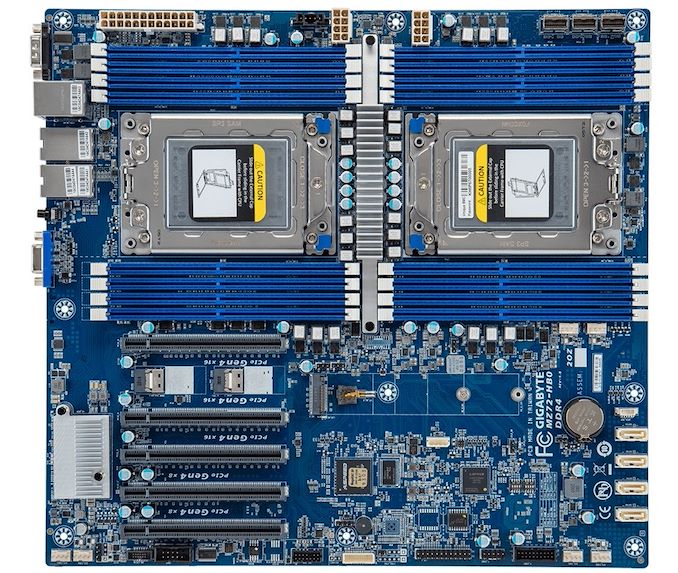
A number of weeks in the past, at Computex, GIGABYTE had revealed their latest revision of the corporate’s dual-socket EPYC board, the E-ATX MZ72-HB0 rev.3.0, which now comes with out-of-box assist for the most recent 3rd era Milan components (The prior rev.1.Zero boards don’t assist the brand new CPUs).
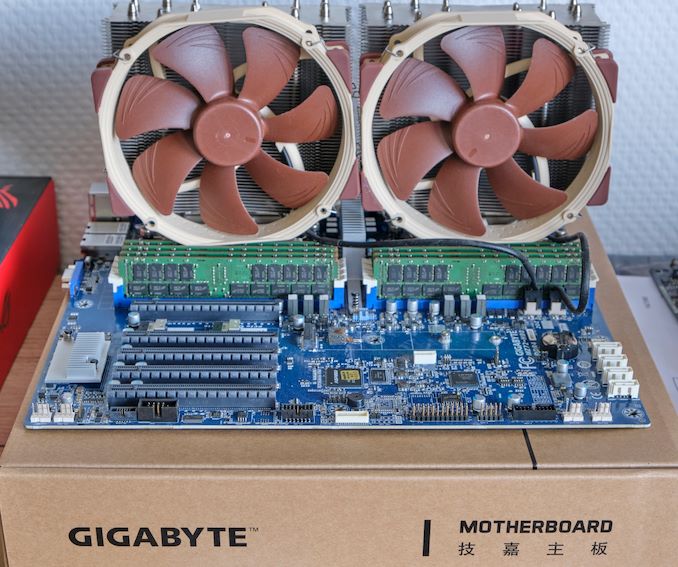
The E-ATX form-factor permits for extra test-bench setups and noiseless operation (Because of Noctua’s huge NH-U14S TR4-SP3 coolers) in additional typical workstation setups.
The platform change away from AMD’s Daytona reference server to the GIGABYTE system even have some vital impacts regarding the 3rd era Milan SKUs’ efficiency, behaving notably totally different by way of energy traits than what we noticed on AMD’s system, permitting the chips to attain even increased efficiency than what we had examined and revealed in our preliminary assessment.
Posting Komentar
Posting Komentar