On our take a look at bench at this time is one among ASUS ROG's fanatic fashions designed for Intel's Rocket Lake processors. The ASUS ROG Maximus XIII Hero brings loads of premium controllers and connectivity to the desk together with twin 2.5 GbE, twin Thunderbolt Four Sort-C, Wi-Fi 6E, 4 M.2 slots, and a strong 14-phase energy supply able to pushing Rocket Lake above its capabilities. Now we have put the Z590 Hero by its paces to see whether it is the champion mannequin within the sub $500 Z590 market.
ASUS ROG Maximus XIII Hero Overview
It's most likely the final desktop processor on Intel's 14nm structure, however Rocket Lake comes a bunch of refinements together with PCIe 4.Zero connectivity by the CPU, help for native USB 3.2 G2x2 on the chipset, and double bandwidth to that chipset enabling deeper IO connectivity. But when each journey wants a Hero, and ASUS believes it has the one motherboard to rule all of them.
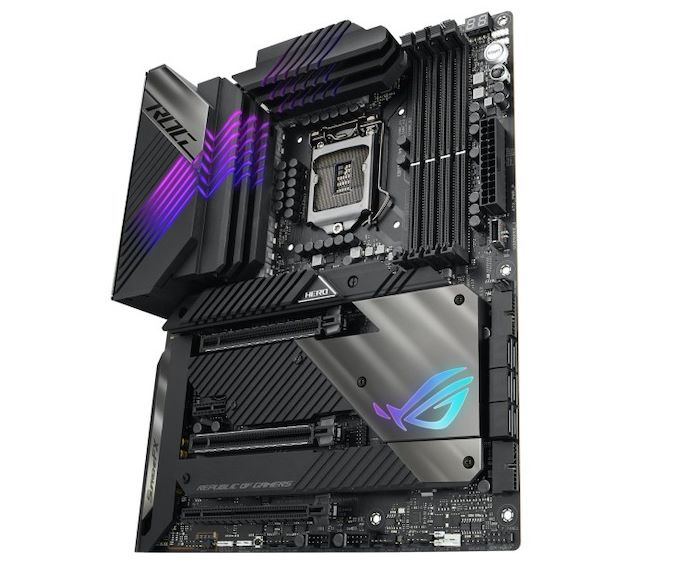
Trying on the design, the ASUS ROG Maximus XIII Hero is utilizing a typical ROG premium theme, with predominately black heatsinks, with some areas laden with shiny gun-metal gray. The Hero has two major zones with built-in RGB LEDs, together with the rear panel cowl, and the chipset heatsink. Aiming for customers searching for a premium expertise, ASUS features a strong all-round collection of options, together with 4 M.2 ports, with one PCIe 4.Zero x4, one PCIe 3.Zero x4, two with PCIe 3.Zero x/Four SATA help, in addition to six SATA ports with RAID 0, 1, 5, and 10 array help.
The Hero's growth functionality is geared for PCIe 4.Zero connectivity, with two full-length PCIe 4.Zero slots working at x16, and x8/x8 when each full-length slots are populated. There are two different PCIe slots, albeit each at PCIe 3.Zero attributable to being pushed by the chipset, which incorporates one full-length slot working at x4, and a small x1 slot. Reminiscence help is one other premium component that consists of supported speeds of DDR4-5333, with a mixed whole of 128 GB supported throughout 4 reminiscence slots.
Consistent with different premium Z590 choices, the Maximus XIII Hero contains an Intel Maple Ridge Thunderbolt Four controller, which provides 40 Gbps Sort-C ports on the rear panel. The board does profit from one USB 3.2 G2x2 port, however this comes through the best way of a entrance panel header. ASUS seems to be utilizing as lots of Intel's Z590 chipset options as it may, which is sweet to see. With regards to onboard audio, ASUS features a premium HD audio codec with a separate DAC. Different notable mentions embrace a stacked USB 3.2 G2 array on the rear panel, with a complete of six for customers to attach up USB gadgets with. ASUS additionally features a strong networking array, with two Intel 2.5 GbE controllers and likewise makes use of Intel's newest Wi-Fi 6E CNVi.
Specializing in efficiency, the ASUS ROG Maximus XIII Hero did nicely in our system exams, with strong and environment friendly energy consumption figures, middle-of-the-road POST instances, and distinctive DPC latency efficiency. In our compute and gaming exams, the Hero remained aggressive.
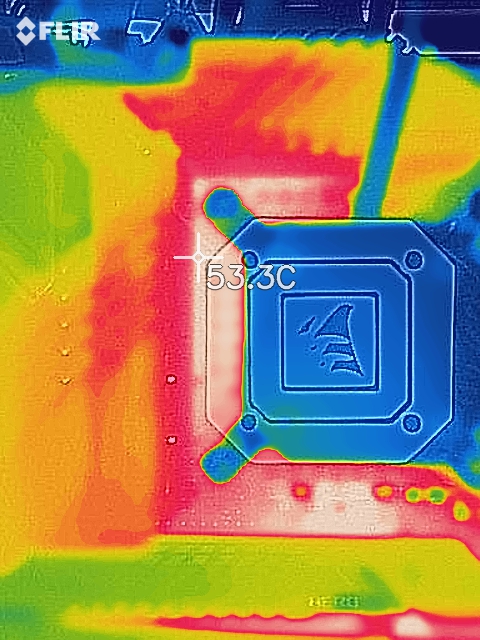
The ASUS ROG Maximus XIII Hero present process our VRM thermal testing
With regards to overclocking, the Maximus XIII Hero carried out very nicely with our i9-11900Okay and confirmed exceptionally tight VDroop efficiency at default loadline calibration and energy settings. We managed to get 5.Three GHz secure all-cores at 1.45 V, though we did expertise some thermal throttling. With extra aggressive cooling strategies employed, the Hero is greater than able to pushing Rocket Lake clock speeds. Energy consumption when overclocked was additionally bearable, which is right down to the standard of the facility supply, with ASUS utilizing premium Texas Devices 90 A Sensible Energy Phases. Our VRM thermal testing additionally yielded very optimistic outcomes with the best working temperatures from all Z590 boards examined up to now.
The ASUS ROG Maximus XIII Hero has an MSRP of $500, however customers procuring round are prone to discover it between $470 and $500. Evaluating it to the competitors on specs, the first competitors comes from the MSI MEG Z590 Ace ($500) which we've additionally reviewed. On paper, each look practically similar, however the Hero advantages from a further 2.5 GbE port, and extra USB 3.2 G2 connectivity on the rear panel. One other profit that the Hero has comes within the software program bundle and the firmware, that are distinctive, and when the {hardware} is backed up with satisfactory firmware/software program, it makes for a extra enticing all-around bundle.
Time to see how the Hero stacks up towards different Z590 fashions! Learn on for our prolonged evaluation.
Posting Komentar
Posting Komentar